

The Natick Theatre was a popular venue for watching silent films and other entertainment during the rapidly changing early twentieth century.
The Natick Theatre
After establishing a train stop through Natick in the mid-1800s, the social economy grew in and around Natick for the following 70 years. The highly popular South Natick Riverside Ballroom, built in the early 1900s, drew dancers and musicians from as far as New York City. Adding to the list of places to go, the Natick Theatre was built downtown by the Suburban Amusement Co. in May 1913. “Considered one of the best theaters in a small town at the time of its erection,” the Natick Theatre thrived for 15 years. It was a silent film house that was the area's first theater. Open six days a week and offering several showtimes a day, the Natick Theatre seats 800.
At its inception, the Natick Theatre was more than just a place to watch films; it was also a venue for live singers and performers. During its first summer, character comedians, ventriloquists, opera singers, contortionists, wire acts, and even a live cartoonist had weekly appearances, with photo plays and silent films shown. Each week, there were new live acts and different motion pictures. Over time, live shows continued, even growing to include full-stage plays. Seats went for a starting rate of 10c and grew to 75c just before they closed permanently in 1929.
The early 1900s were the era of “one-reel” films. Projectors at the time were extremely loud and could hold only 1,000 feet of film, or 1 reel. This meant that the excitement of watching a motion picture lasted from eleven to seventeen minutes. After 1908, it became a standard for silent films to be accompanied by live music for viewers, which helped to drown out the projector's sound. Instead of relying on a gramophone, the Natick Theatre was equipped to host live musical acts, making it all the more innovative and modern and helping it survive in the motion picture industry. From 1913 to 1927, the Natick Theatre remained widely popular and had unwavering success.
For nearly a decade, the film industry tried to incorporate synchronous sound into motion pictures. It was not until the fall of 1927, with Warner Brothers’ The Jazz Singer, that the sector saw success. Silent and sound pictures were produced jointly for a few years since silent film houses dominated the theater market. Studios worldwide were officially switching to talking pictures, and theaters were also transitioning to sound-on-wire. To equip a theater for sound meant purchasing lots of new technology, which many theaters could not afford. With the rapid advancements in the motion picture industry, the dawn of “talkies” had unfortunately rendered the Natick Theatre obsolete by the end of 1929.
While many in the motion picture industry were still determining the future success of sound pictures, the announcement of the brand-new, state-of-the-art Colonial Theater marked the beginning of the end for the Natick Theatre. On December 6, 1929, the Colonial Theatre held its grand opening, a week after the Natick Theatre closed. It had an audience of 1,500 and was equipped for sound and full-stage performances. The Colonial remained open until November 1957.
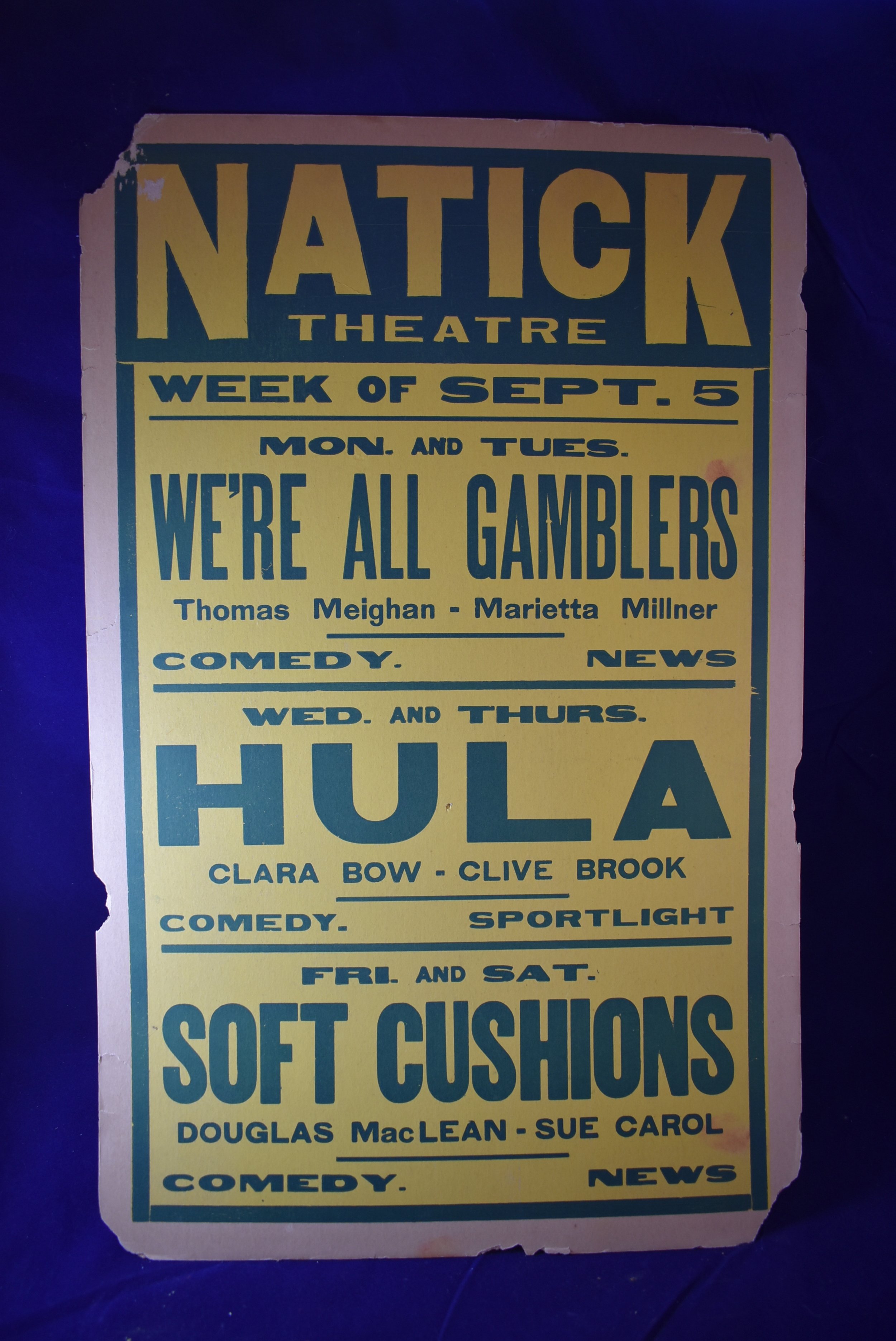
Broadsides from the Natick Theatre (NHS Collections)
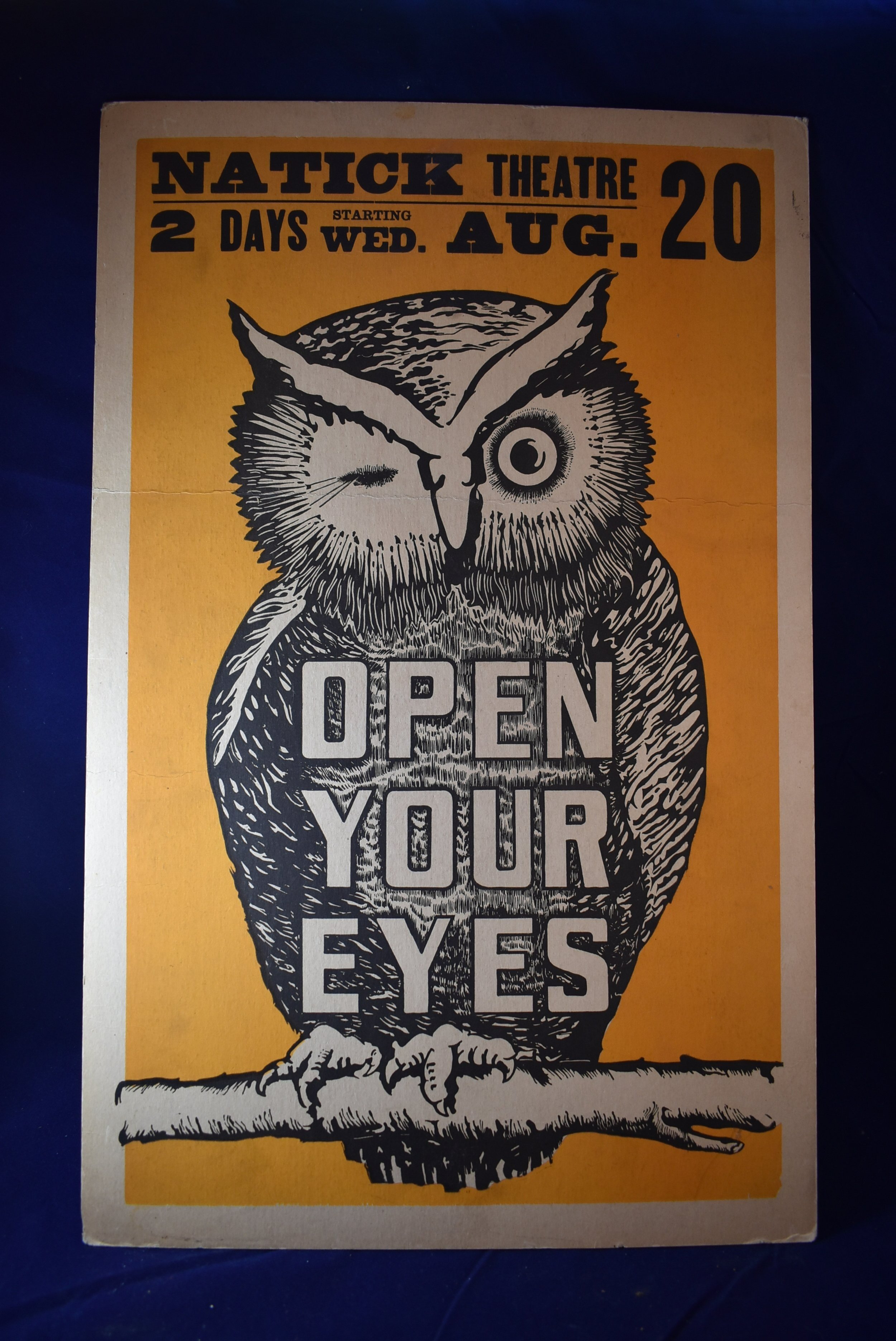
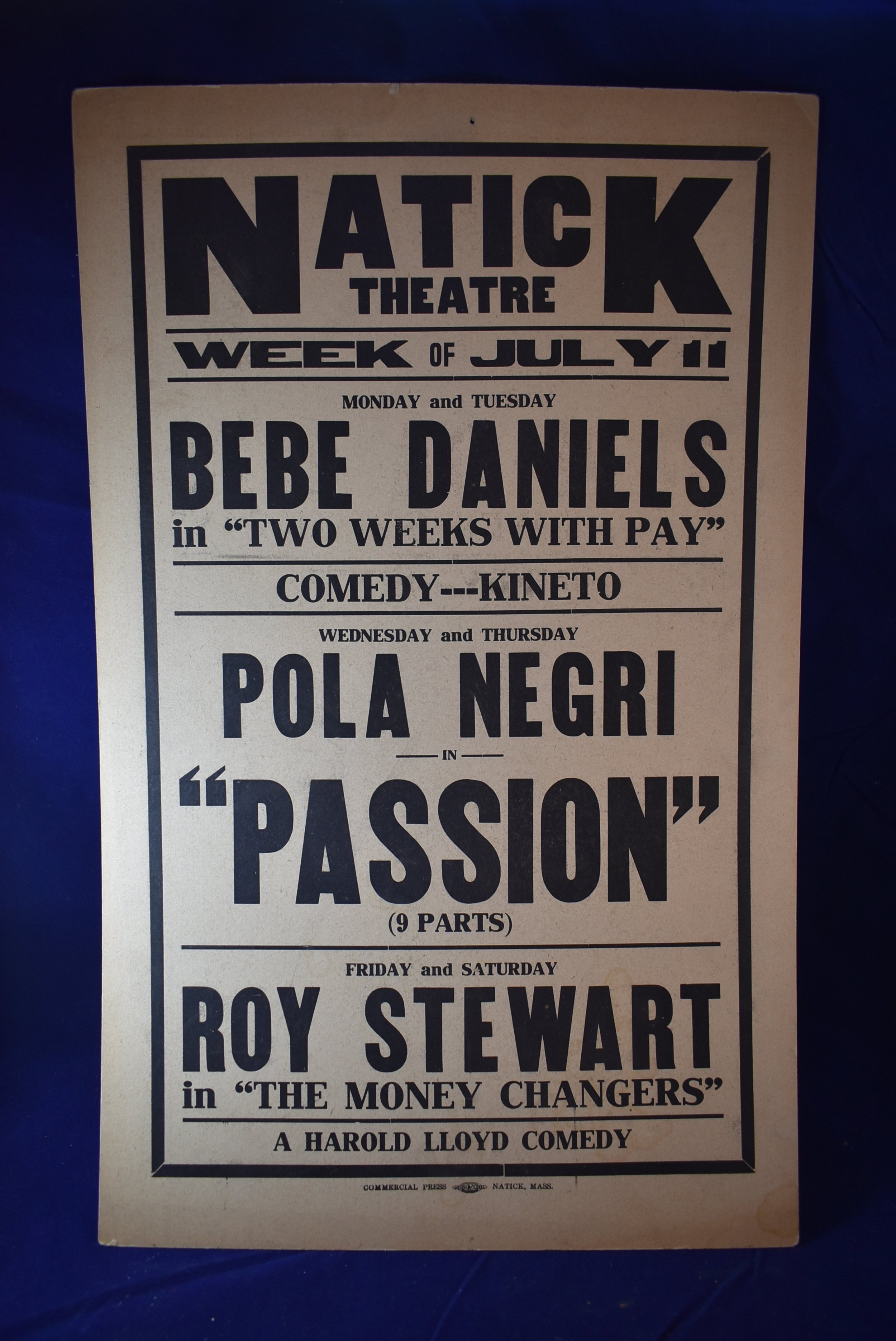
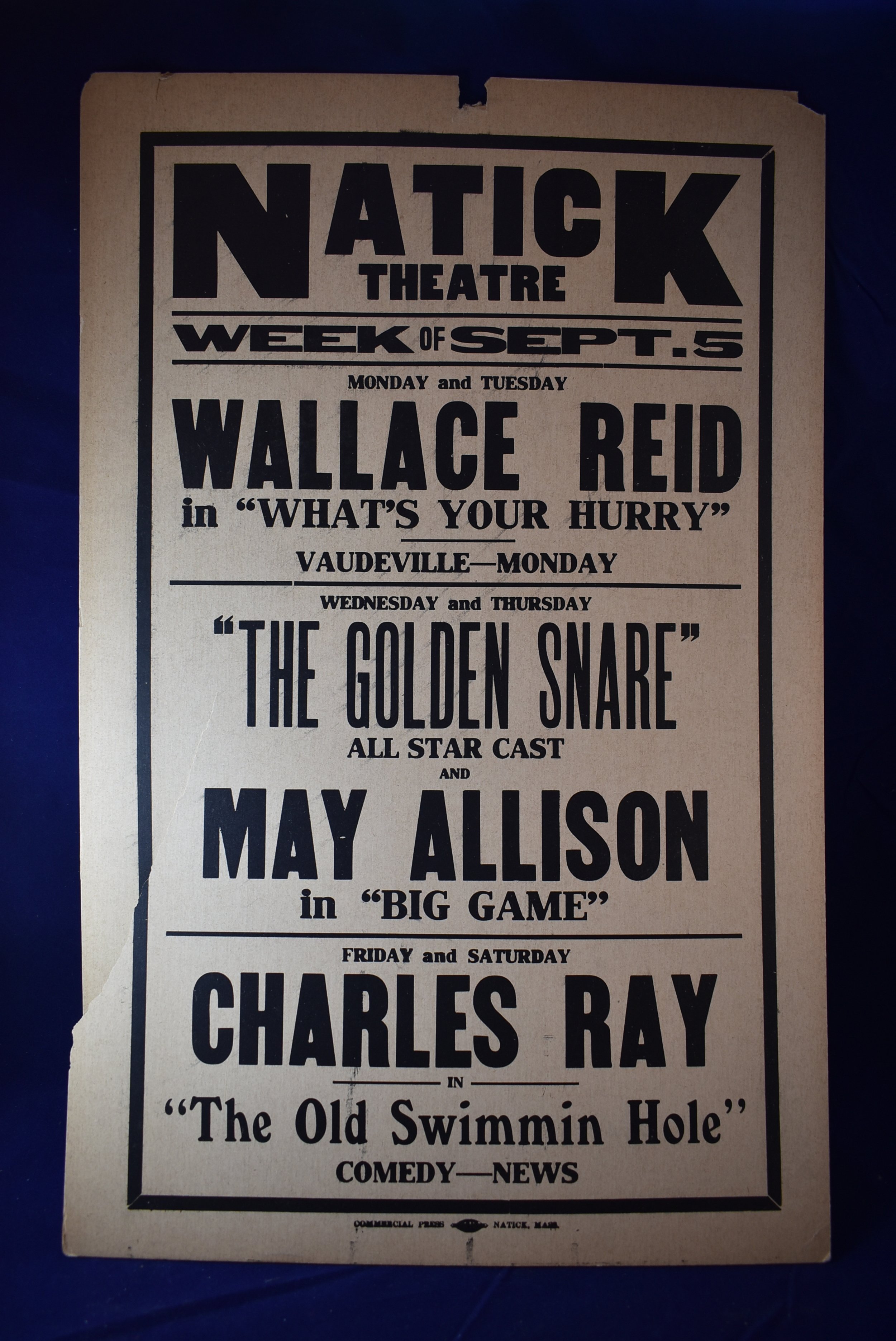
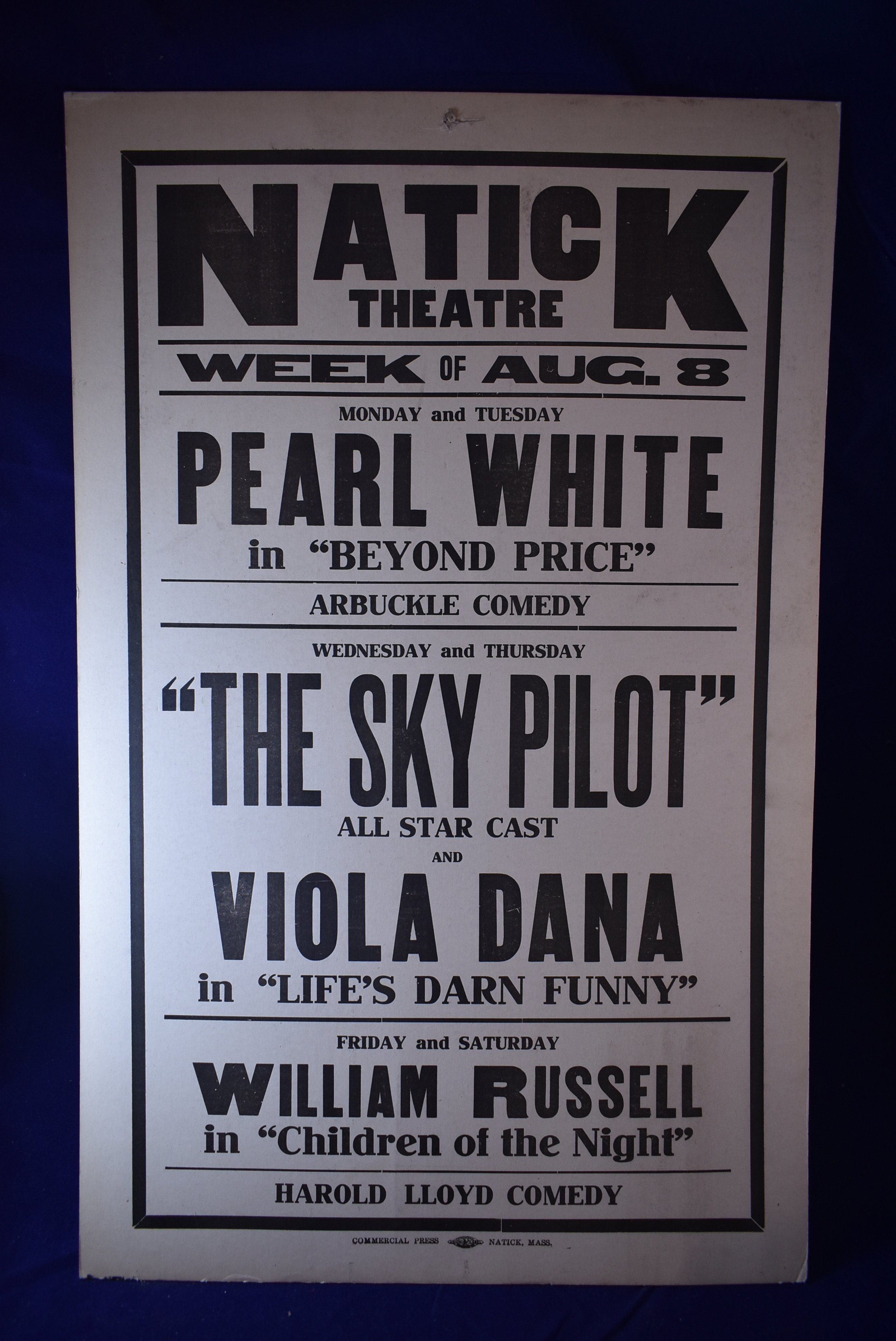
By Laura Harms
December 2022
Selected sources and additional reading:
Natick Historical Society Collections.
The Natick Bulletin (1913-1929) “Natick Theatre.”
“Natick's Colonial Theatre.” Natick, http://natickmass.info/natickcolonial.htm.
Wodeyla, D. Natick Theatre, Cinema Treasures. Available at: http://cinematreasures.org/theaters/9299.
Music in Silent Film. Film Reference. Available at: http://www.filmreference.com/encyclopedia/Independent-Film-Road-Movies/Music-MUSIC-IN-SILENT-FILM.html.
American cinema in the 1910s. Wisconsin Center for Film and Theater Research. Available at: https://wcftr.commarts.wisc.edu/exhibits/harry-roy-aitken-papers/american-cinema-1910s.